
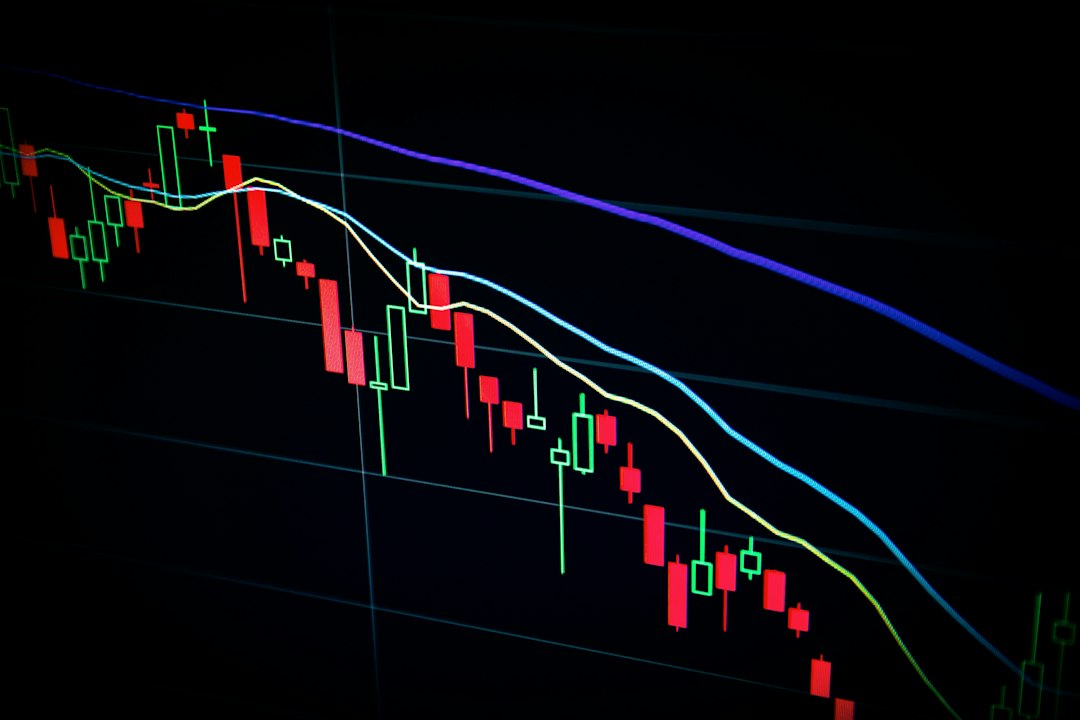
Currency, Crude and Global Indices: A Trader’s Triangle
Experienced market participants often describe a triangle that governs Indian equities: global indices, crude oil and the rupee. Each corner influences the others, and together they shape sentiment on any given day. Traders who monitor Dow Jones Live movements understand the global corner of this triangle, since overnight trends feed straight into local expectations. Those who follow the Hang Seng Index add a regional dimension, noting how neighbouring markets are responding to the same pressures. Learning how the three corners interact can sharpen both short-term trades and long-term investing decisions.
The Global Corner: Sentiment and Liquidity
Global indices are barometers for the risk appetite of the world. When the risk appetite increases, funds flow towards growth assets like Indian stocks. When it decreases, funds flow towards safe haven assets like government securities and gold.
Global liquidity is of great importance to India. Loose liquidity leads to inflows into emerging markets and tighter liquidity leads to outflows. So, watching the rates of interest globally is important to understand how the Indian markets will behave.
India imports more than 85% of its crude oil needs. This makes India’s energy security very vulnerable to price fluctuations. A rise in crude prices increases India’s import bill, thus, adversely impacting the current account deficit, inflation, and profit margins of airlines, paints, chemicals, and other transporters. A fall in crude prices, on the other hand, helps to reduce inflation and the current account deficit. It also helps the profit margins of airlines and other transporters. It also allows the RBI to cut rates and remain accommodative. However, falling crude prices affect exploration and production companies adversely, so it is important to not assume that a fall in crude prices will benefit all Indian stocks.
The Rupee Corner: Where Everything Meets
The Indian Rupee is a barometer for the other two corners. A dip in global indices and a rise in crude prices usually lead to a depreciation in the Rupee and vice versa. A weaker Rupee benefits India’s exports and hampers its imports. It also impacts students and tourists who hold foreign currency and have to pay in Rupees. The export sector consists of the IT sector, pharma sector, and textiles, among others. Meanwhile, importers are impacted as well as students, travelers, and those with foreign currency loans. As such, the value of the Rupee is important to watch out for as it gives an indication of which sectors are likely to benefit or get adversely impacted.
Using the Triangle to your Advantage
Suppose, on a given day, you observe that the global indices have fallen, crude prices have risen, and the Rupee has depreciated. These are usually bad signs for the Indian markets. As such, a prudent investor would reduce exposure to leveraged stocks and set stop-losses in case any of these three turns negative. They could also look to benefit from falling global indices by buying dips in global index funds, global ETFs, and other similar assets. On the other hand, suppose on a particular day, you observe that the global indices have risen, crude prices have fallen, and the Rupee has appreciated. These are good signs for most Indian stocks. However, it is important to note that on most days, some of the three will turn positive while others will turn negative. It is important to remember that markets rarely give clear-cut signals.
A good way to use this triangle is to assign a positive, negative, or neutral score to each corner each day. If all three are positive or all three are negative, it is a good day to be confident about your trades. If some are positive while others are negative, take small positions and wait for a confirmation day before taking big positions.
The Pitfalls of the Triangle
You must understand that any methodology will have its limitations. Local factors such as the Union Budget, elections, monsoon, corporate results, and regulatory changes also impact the markets. As such, it is important to analyze such factors before making any trade. Also, keep in mind that individual stocks are impacted by company-specific news.
Using the Triangle: A Few Final Words
The triangle helps you to be aware of the bigger picture. It helps you to understand what is happening in the larger markets. It takes only a few minutes to assess the three aspects and come up with a conclusion. As a long-term investor, the triangle helps you to understand the need to diversify across exporters and domestic consumption, across sectors, and also to hedge with gold and debt. As a trader, the triangle helps you to understand the need to manage risk and take calculated positions. It helps you to have a methodology to rely on instead of taking impulsive decisions without thinking. It helps you to be prepared and to make decisions based on facts and not emotions.
The Short Version
- Global indices influence Indian equities, with rising risk appetite leading to inflows into growth assets like Indian stocks.
- India’s heavy reliance on crude oil imports means that fluctuations in crude prices significantly impact the current account deficit, inflation, and profit margins across various sectors.
- The Indian Rupee’s value serves as an indicator of the relationship between global indices and crude prices, with depreciation typically hindering imports and benefitting exports.
- A combination of falling global indices, rising crude prices, and a depreciating Rupee generally indicates adverse conditions for Indian markets, prompting conservative trading strategies.
- Local factors such as government policies, election outcomes, and individual company news can also significantly affect market conditions, necessitating a holistic analysis beyond the triangle model.